

Keep, Expand, Relocate, or Exit? Reviewing the Clinics You Already Have
Before you decide where Site 4 goes, decide what Sites 1 through 3 are supposed to be doing next year. Every open clinic gets one of four verdicts, the evidence behind it, and the date the verdict has to become an action.

Negotiating Room to Grow in Your Clinic Lease
Expansion rights get priced like everything else in a lease. Here is what a ROFO, a ROFR, a fixed option, and a must-take actually give you, what each one costs, and how to match the expansion mechanism to your growth plan.

Building Your 2027 Real Estate Budget
Rent is one line. The 2027 real estate budget also carries escalations, CAM true-ups, retention releases, equipment deposits, and a build that spends before it reimburses. Here is how I classify every dollar and lay it out by the month cash actually clears.

What I Look For When I Walk a Building
A broker tour asks whether you could see your clinic here. A diligence walk asks whether the building can physically become your clinic, on budget and on time. Who to bring, what to check, and when to walk away.

What Does a Healthcare Real Estate Advisor Actually Do?
One year into running Retained CRE full time, the question I get most is "what do you do?" The honest answer: real estate is the door I walk in through. What's on the other side is the whole business.

AI Makes Clients Smarter. Here's the Context It's Still Missing.
A client's AI site analysis trashed the site we were pursuing and praised the one we passed on. Then we gave it the drive-time data and lease economics, and it flipped. Where AI helps, where it goes wrong without your context, and why a human in the loop still makes the call.

Financing the Footprint: Why Real Estate Strategy Has to Align with Your CFO
Most healthcare founders model dilution during fundraising but ignore how lease structure and build-out financing quietly increase cost of capital and suppress valuation.

The Fourth User: Designing for the People Who Come With the Patient
Clinics are programmed for three users: patient, provider, staff. The companion who carries the visit home never makes the program. Designing for the fourth user, in the space you already have.

Why Most Healthcare Founders Underestimate Their Clinic Launch Timeline
Most founders think a new clinic is a 6-9 month project. This guide reveals why that thinking is a dangerous trap and what the true timeline looks like.

Your Virtual Model Isn't a Blueprint for Your Physical One
You built a virtual practice and it's working. Now you're adding physical. The operating playbook, the team, the unit economics, the patient acquisition assumptions don’t transfer cleanly. Here's what shows up the day you sign a lease, and what your team has never had to do.

The Coordination System: Who You Actually Need to Build Your First Clinic, and When
A first clinic is four phases, each with specialists who add the most value at specific moments. The seams between them are where 25% of timeline and budget disappear. A phase-by-phase map of who you actually need, when.

The Landlord's Math: What Private Building Owners Actually Want From Healthcare Tenants
The private landlord who owns a single freestanding building looks at your deal differently. Owned for 30 years, no debt. They want one thing: a tenant who shows up, pays rent, and doesn't call with problems. Here's their math — and how to negotiate from it.

Finding Bridge Space When Your Waitlist Is 60 Days Out
Your waitlist is 60 days out and you need exam rooms now. But in tight suburban markets, "move-in ready" clinical space doesn't exist. All three paths have hidden costs—and desperation costs even more than speed.

The Second Site Paradox: Why 1 + 1 Equals 0.5 in Clinic Growth
Site #2 is where healthcare founders learn whether they built a real system or just survived Site #1 through brute force. Here’s why expansion often slows momentum instead of compounding it.

The Broken Brokerage Model: Why Commission Hurts Clinic Strategy
Healthcare founders often treat brokers as neutral guides. They are not always incentivized that way. Here’s where the model breaks and what to do instead.
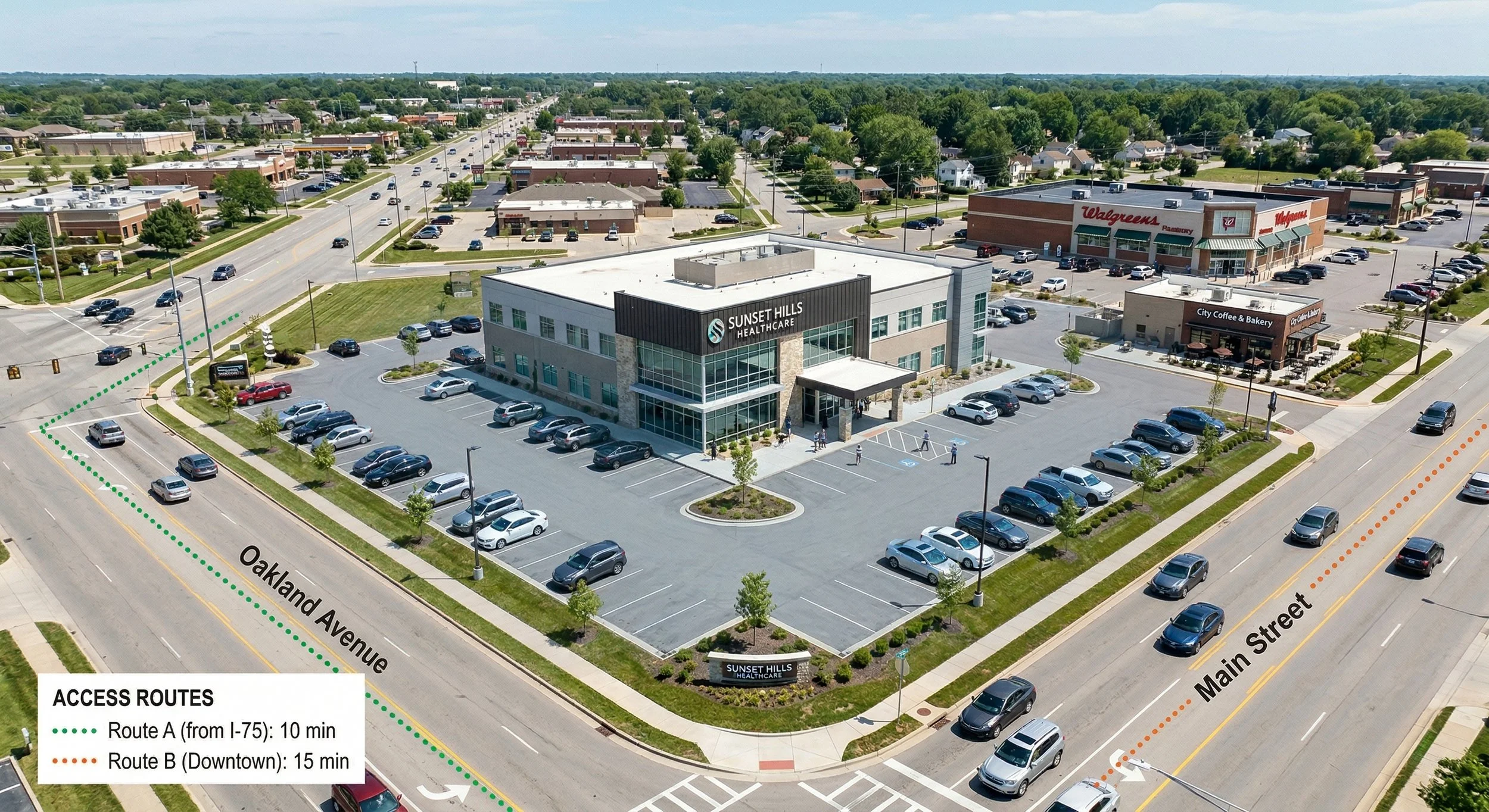
Market & Site Selection: An ELI5 Guide for Healthcare Founders
A simple, operator-focused glossary of the terms that actually matter in healthcare site selection—so you don’t lock in the wrong constraints for the next 10 years.
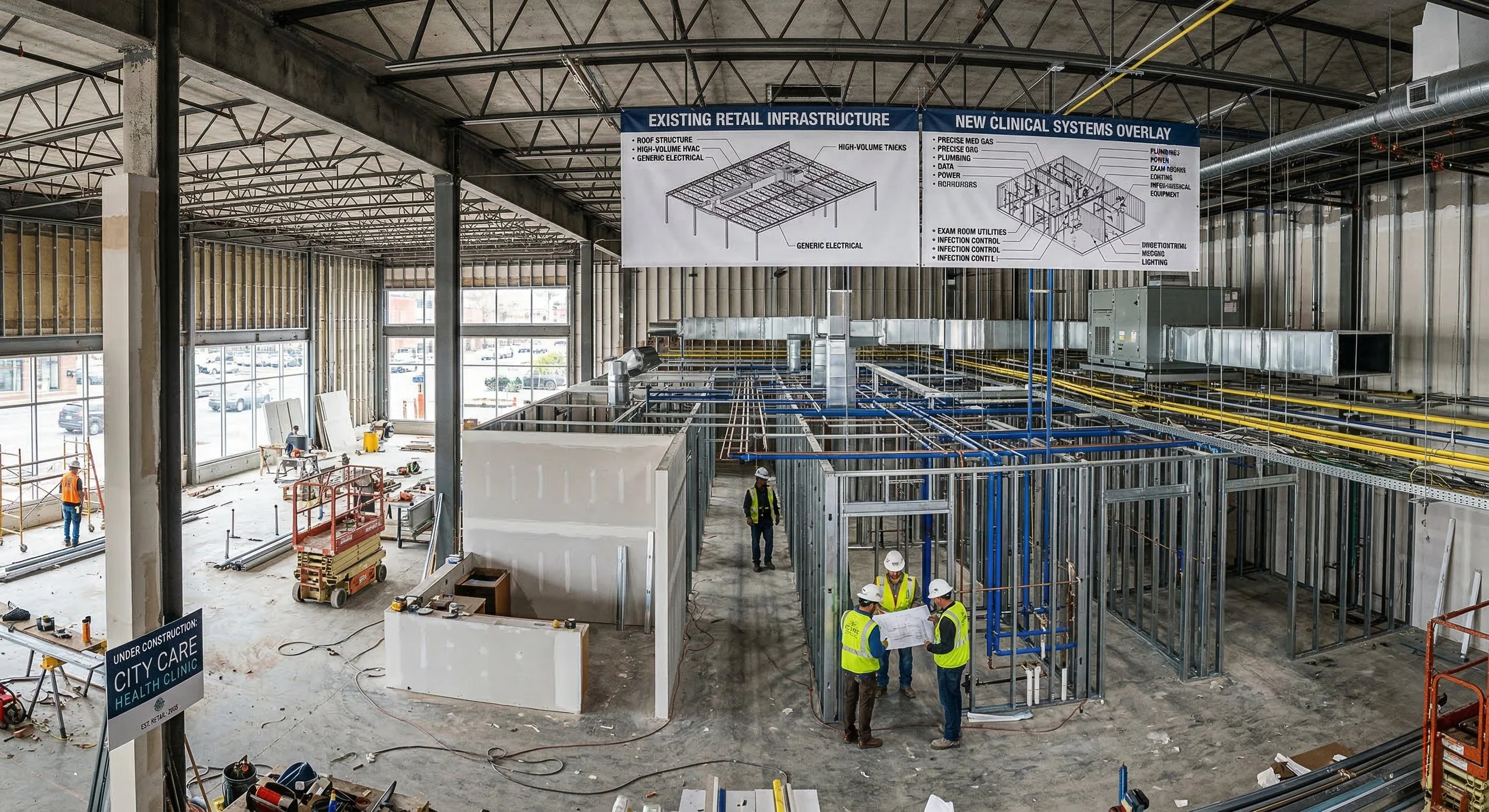
Medtail Reality Check: A Smarter Way to Evaluate Build-Out Costs
Most founders evaluate Medtail deals based on cost. The real question is what level of patient volume that cost requires—and whether your model can actually deliver it.

The High-Precision Clinic: Why AI Changes Your Real Estate Math
Most clinics are slowed down by paperwork and scheduling errors. By using AI to handle the administrative "clutter" in the background, healthcare founders can stop wasting expensive office space and finally see more patients in the same footprint.

Section 3: The Physical Integration & Design System
If Strategy is "Source Code," Physical Integration is "Hardware Specs." Most projects fail at the Critical Collision—where medical tech meets the building shell. In Section 3, we map the MEP Handshake and Patient Circuit to ensure your engine fits the chassis.

Winning the Real Estate War: How Healthcare Startups Compete with "Big Credit"
In a market dominated by institutional giants, healthcare startups can’t win on credit alone. Discover strategies for overcoming objections from landlords.