

Negotiating Room to Grow in Your Clinic Lease
Expansion rights get priced like everything else in a lease. Here is what a ROFO, a ROFR, a fixed option, and a must-take actually give you, what each one costs, and how to match the expansion mechanism to your growth plan.
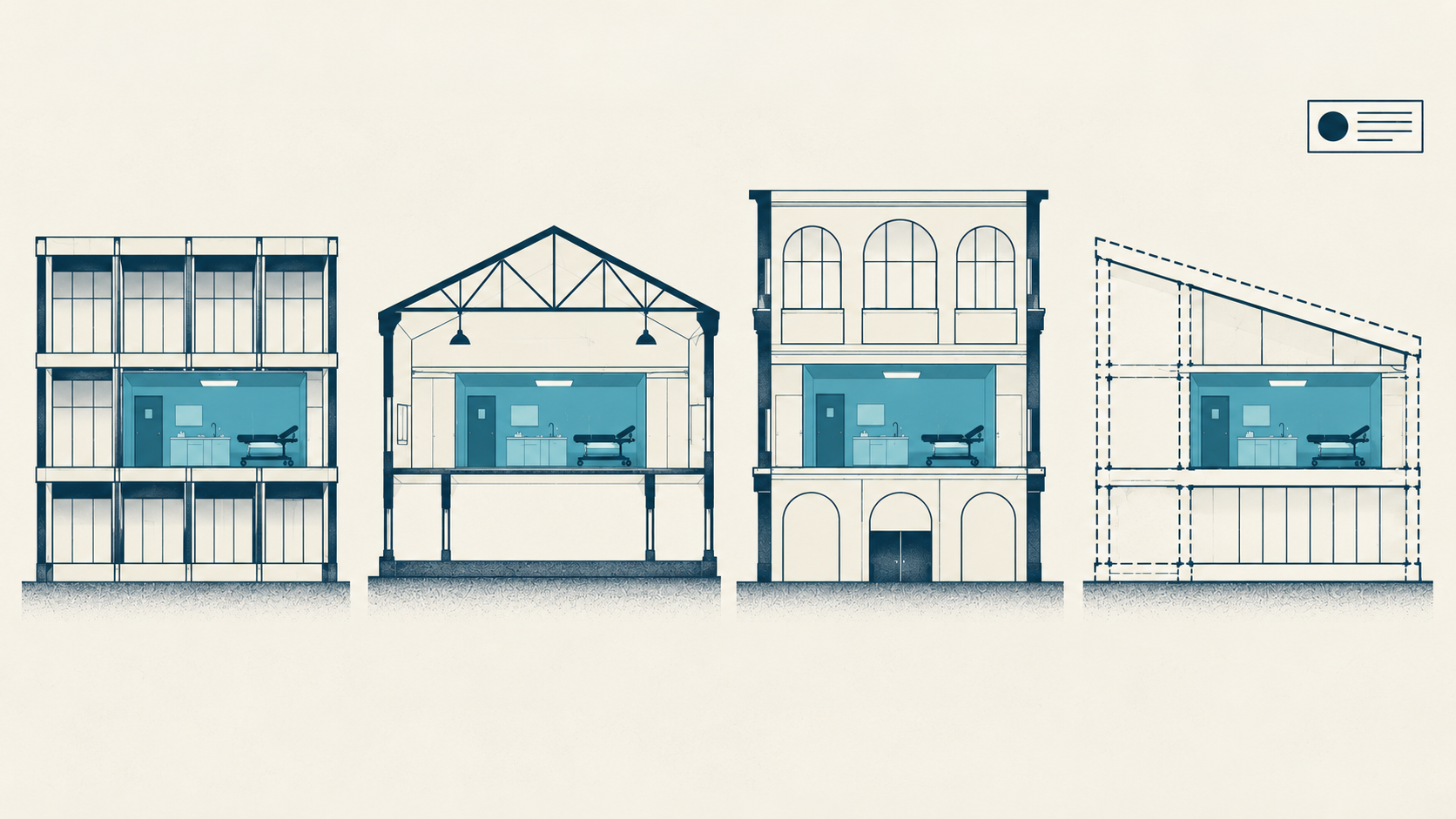
Building a Clinic Prototype You Can Use Again
By site 3 you have a prototype, written down or not. The question is who owns it, what it takes to change it, and whether you’ve documented well enough for the next architect to use it

Building Site 2 While You're Still Growing Site 1
Your second build runs on the same scarce resources as your first live clinic: attention, clinical leadership, and cash. How to structure decision rights, the prototype, and the cash model so the ramp and the build stop competing.

Your Patients Are Everywhere. Your First Clinic Can't Be.
Your panel is spread across thirty states. Your first clinic serves a 25-minute drive radius. The patient heat map will point you to the wrong city — here are the four filters that find the right one.
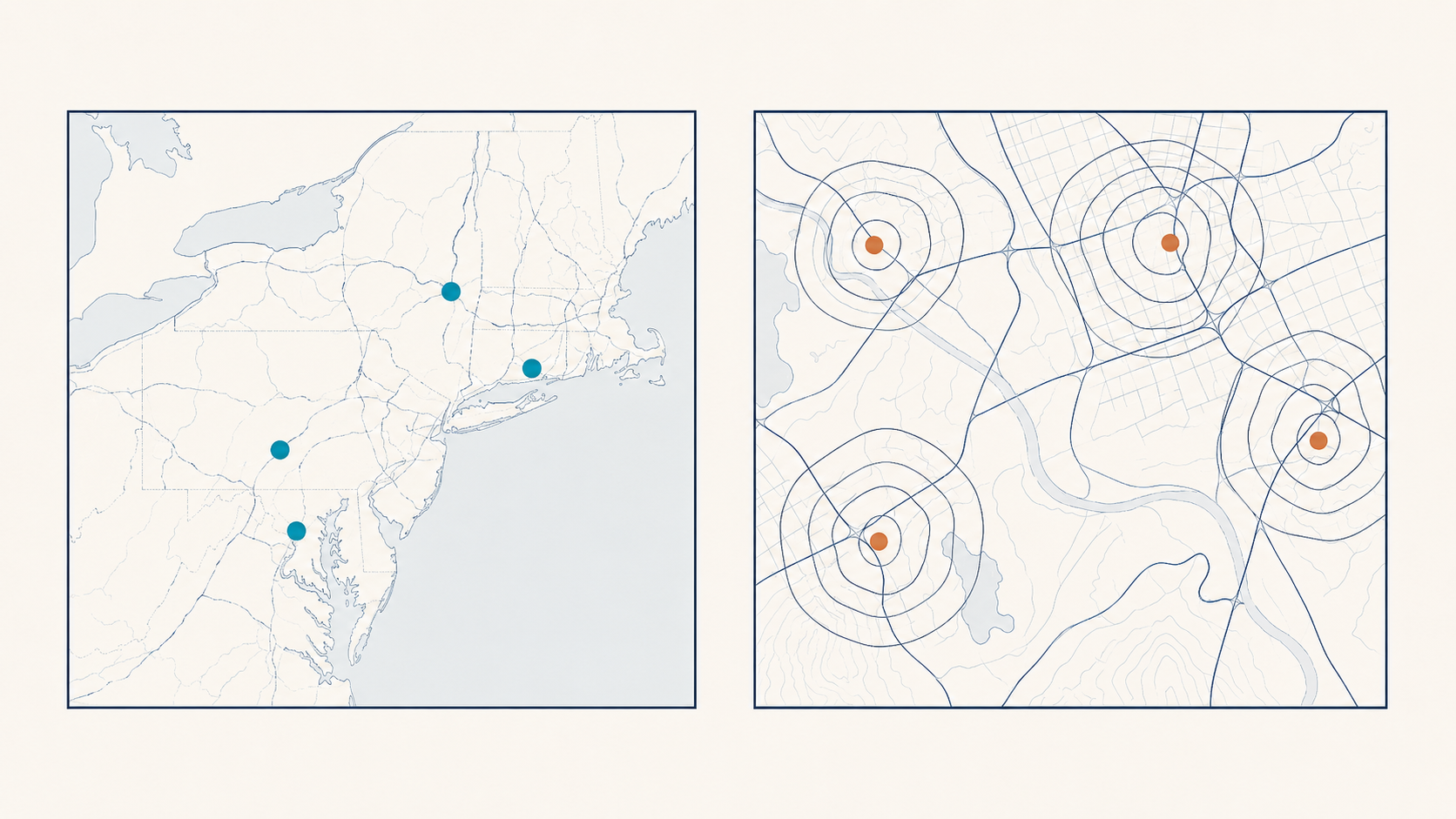
Sites 3 Through 6: One Deep Market or Five Shallow Ones?
Sites 3 through 6 decide whether your clinics compound or just accumulate. Density buys float pools, faster builds, and payer leverage. Spread buys the national story. Here's what each costs, and how to choose.

The Second Site Paradox: Why 1 + 1 Equals 0.5 in Clinic Growth
Site #2 is where healthcare founders learn whether they built a real system or just survived Site #1 through brute force. Here’s why expansion often slows momentum instead of compounding it.
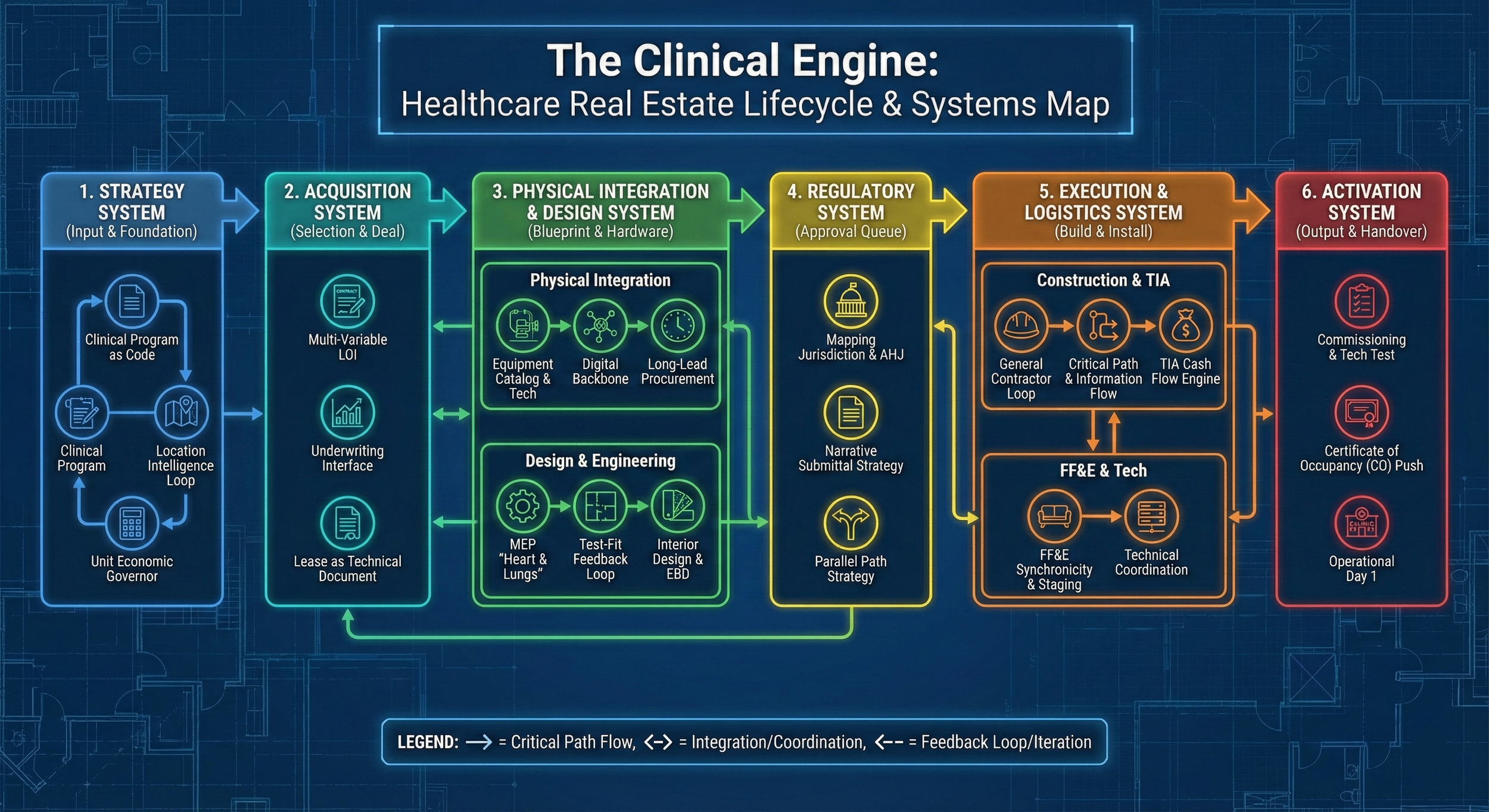
The Clinical Engine: Why Healthcare Expansion is a Systems Problem
Stop looking at real estate as a "location" problem. To scale a healthcare brand without bleeding cash, you need to view your expansion as a high-performance engine.